Monday, January 30, 2012

Conservative Friends of Bangladesh


Tonight we launched the Redbridge branch of Conservative Friends of Bangladesh. A meeting hosted by local chairman Mina Rahman, heard from national chairman Tony Lee, Ms Subrina Hussain, Cllr Matthew Chaudhury, 2010 Parliamentary candidate Zakir Khan, Anne Main MP and of course myself. The audience were really keen to take the Conservative message to London's Bangladeshi community, and it was particularly good to see so many women in attendance. I'm looking forward to working with them

Wildlife Crime Partnership


This morning I joined Romford MP Andrew Rosindell at City Hall to mark the start of a new partnership between the Met Police and the World Society for the Protection of Animals. The Society are providing £100,000 to support the vital work of our Wildlife Crime Unit. On display were illegal items recovered by the unit, including rhino horns, the polar bear skin in the picture and - sadly - a pair of stuffed tiger cubs which were found far from home on a mantelpiece in Islington. London is a key centre for the trade in illegal wildlife products with the profits often going to support organised crime and even terrorism. This historic partnership will help to put and end to the vile trade. More details can be found at http://www.operationcharm.org/ .

Budget Debate 2012


Here is my take on the alternative budgets proposed by the Lib Dems, Greens and Labour at last Wednesday's budget meeting.

Saturday, January 21, 2012

Out and About in Redbridge


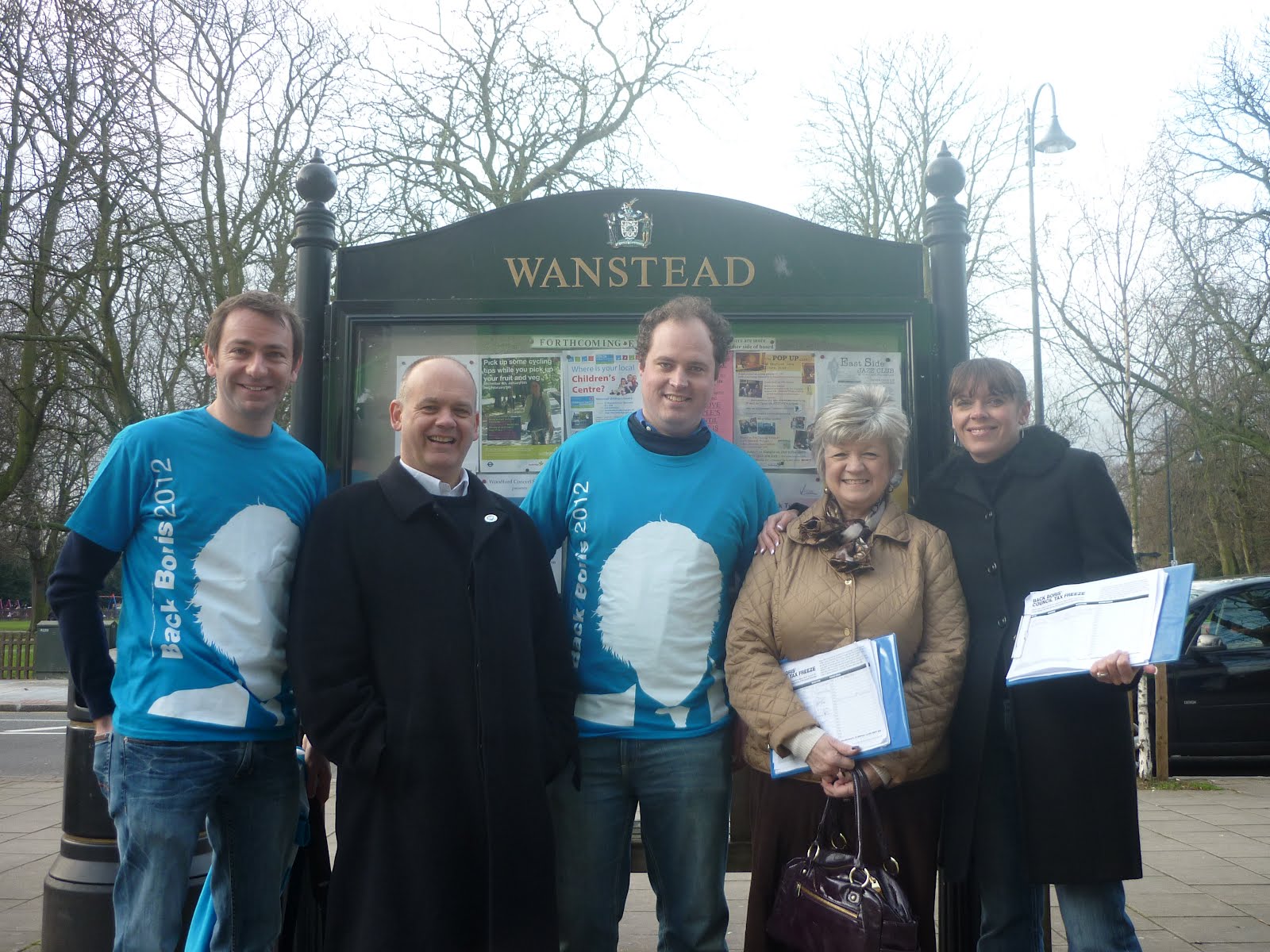
A bright and breezy Saturday morning greeted our Redbridge campaign. In Barkingside I joined local MP Lee Scott, Assembly list candidate Nadia Sharif and local councillors to meet constituents and tell them the good news about Boris freezing the council tax precept for the fourth year in succession. I went on to Woodford where Monkhams councillors were taking the message to local shoppers. Finally I dropped in to Wanstead where Conservative deputy leader Cllr Michelle Dunn and cabinet member Cllr Suzanne Nolan were leading a team sporting blue 'Back Boris' shirts. The response was very positive and there was no sign of Labour's activists.

Friday, January 20, 2012

Elm Park Station


A busy weekend of campaign activity kicked off at Elm Park Station this evening as I joined local councillors Jeff Brace and Barry Oddy, to meet commuters and explain plans for improving the District Line. The work has been going on for some time, patience is short, and a signal failure didn't help the mood. On the positive side, the local police were there with their knife arch, searching suspects, deterring crime and helping everyone feel safe. This is a busy station in the heart of Havering and we were encouraged by the positive response from commuters who we spoke to.

Tuesday, January 17, 2012

Transport Debate

An interesting and wide ranging transport committee meeting took place this morning.


Hammersmith Flyover

Leon Daniels from TfL gave us an update on Hammersmith Flyover, which was closed for emergency work over Christmas and the New Year. One lane is now open and operating in each direction whilst work takes place to replace steel cables inside the unique 1961 structure. The new cables will be made of stronger steel and with the concrete still in very good condition, the strengthened flyover is expected to last for several decades. Only one section was found to be badly damaged so the emergency work is going to be less than expected.


River Transport

Sean Collins from Thames Clippers appeared alongside TfL, the PLA and my colleague Dick Tracey, taking questions in his role as Mayoral Ambassador for River Transport. Over ten years the number of river passengers had grown from 1.6 million to 4.1 million per year - not including the 2 million users of the Woolwich Ferry. Of these, two thirds were commuters with the remainder being tourists.

4.1 million sounds like a lot but it is no more than an average suburban bus route would transport over twelve months. The Mayor's ambition was to get the number up to 12 million per year. With 10 million per year using river services in Brisbane - a much smaller city - this target was felt to be reasonable. In Brisbane a milder climate, better coordination with bus routes and the lack of an underground railway had all contributed to the high numbers.

Dick talked about plans to extend river services upstream with commuter boats calling at Putney. Further west would be more difficult because the water was relatively shallow at low tide. I asked about plans to extend services downstream to Rainham, allowing commuting from Essex and improving access to the nature reserve at Rainham Marshes. Sean Collins was very positive, stating that a service already ran to Tilbury, although it only served cruie ship passengers currently. Dick talked about introducing a park and ride facility at Rainham, encouraging commuters to leave their cars just where the A13 became congested.


Tube Extensions

Witnesses from TfL discussed the Tube extensions currently under consideration.

The most advanced of these is the Northern Line extension to Battersea. With a price tag of £900 million, private sector financing is essential so the plans had been set back when Treasury Holdings, the private funder, collapsed before Christmas. Despite this TfL are continuing with the Transport & Works Act application to Parliament, in the hope that a new developer can be found. For the longer term they are planning to extend the line to Clapham Junction.

An extension to the Croxley branch of the Metropolitan Line, linking with Watford Junction, is supported by TfL but funding and promotion will be carried out by Herts County Council as the project is outside the Greater London boundary.

Extension of the Bakerloo Line to South East London is supported in the longer term. Caroline Pidgeon and Jenny Jones were very much in favour as they live in Camberwell Green. Funding is not available and the Bakerloo Line upgrade needs to be completed before the 'Camberloo Extension' is considered.

Central Line extensions east to Harlow and west to Uxbridge are being considered, but the business cases are questionable.

Crossrail 2 - previously known as Chelsea to Hackney - is climbing up the list of priorities, spurred on by the agreement of HS2.


Stations

We also examined progress on major station upgrades.

Tottenham Court Road is being enlarged to lift its capacity from 145,000 per day to 250,000 per day - more than the throughput of Heathrow. There will be disabled access and a link to the new Crossrail station. At a cost of £500 million I asked London Underground to consider enlarging the bus stands on the surface, thus making it possible to terminate more services there and relieve bus crowding in Oxford Street.

Victoria is also being enlarged to improve capacity and create a new ticket hall, at a cost of £580 million.

The new Crossrail station and increased capacity at Bond Street is expected to cost £285 million.

Disabled access and improvements to the Hammersmith & City platforms at Paddington are relatively cheap - only £53 million.

A major upgrade at Bank will improve capacity and provide new lifts to street level at an expected cost of £600 million. I suggested that they provide a moving travelator between the Bank and Monument platforms as the walking distance is considerable - much as London Underground have done at Waterloo.

I also suggested that London Underground raise the priority of lift installation at Newbury Park. With a price tag of no more than £20 million this represents a comparatively small investment, yet with National Express East Anglia using the station for their passengers during Liverpool Street line closures, disabled access will benefit many passengers. Network Rail might even be persuaded to stump up some cash for this project.

Friday, January 13, 2012

Mansion House Speech

Last night I attended the star studded annual London Government Dinner at the Mansion House. Apart from being a high point in the London social calendar, the dinner - hosted by the Lord Mayor - provides an opportunity to hear the elected Mayor of London set out his priorities for the coming year in his after dinner speech.

Boris was on good form, infectiously optimistic about the Olympics and drawing comparisons with the austerity games of 1948 when Canada donated the wood for the diving boards, the running track was paved with cinders and the visiting athletes were accommodated in draughty school halls. Britain came 12th in the medals stakes, despite Russia and Germany not taking part. Boris expects us to do better than that in 2012.

He also spoke about prioritising London's road network for future investment. The recent closure of the Hammersmith Flyover - and earlier problems at Gallows Corner and Gants Hill - resulted from years of under investment. The Labour government and the Livingstone regime had thoughtlessly pursued an anti car policy without understanding that cyclists and buses relied on the crumbling roads as well as motorists. In addition to more investment in maintenance and new road schemes there would be a new river crossing via a tunnel at Silvertown. As from this morning, Boris announced, the Hammersmith Flyover would reopen one lane in each direction - he got half a cheer for that...

Wednesday, January 11, 2012

Budget Round Opening Skirmishes

The Budget Committee has been meeting to consider its response to the Mayor's budget proposals - the fourth and final budget round of Boris's first mayoral term.

Last week we questioned the transport commissioner, chairman of LFEPA, deputy mayor and senior representatives of the Metropolitan Police. Yesterday it was the Mayor's turn in the spotlight.


Council Tax Freeze

The headline news is that the council tax precept is to be frozen for the fourth year in a row, leaving the budget exactly where we found it after Livingstone lost power in 2008. In real terms inflation makes this a 12% cut as opposed to the 153% increase that occurred under the Livingstone regime when costs were allowed to let rip. It is a considerable achievement and almost as impressive is the fact that it is no longer debated by the major parties. We can expect to see alternative proposals from the other groups which also leave the council tax frozen. Indeed the Lib Dem's Mike Tuffrey was asking Boris for a council tax cut yesterday - thus stealing the question that I usually pose - so coalitionism is clearly having a positive effect on our partners.


Policing

The opposition are keen to discuss the changing number of police officers and other crimefighters in the capital. Facing a difficult budget gap, the police are fighting to maintain officer numbers whilst making savings in support services, procurement and property. A £30 million saving from the LFEPA budget has been offered up to help them bridge the gap this year, but further government funding is required and negotiations with the Home Office are still ongoing.

Boris seemed quite upbeat on the prospects for a successful conclusion when we saw him yesterday. Senior police officers were also positive last week, with Acting Deputy Commissioner Cressida Dick maintaining that services would not be harmed and the crime fighting capacity of the MPS would be kept up. The aim is to have some 32,300 fully warranted officers in post in March - 1,000 more than when Boris came to power, but a fall on more recent numbers.

The Met is one of the few police forces still recruiting new officers and these are being drawn largely from the ranks of PCSOs and special constables. The number of specials has grown over the mayor's term but the promotion of good PCSOs - which none of us want to stifle - is leaving vacancies which will take time to fill. The police have undertaken to recruit to those vacancies but some may be unfilled by May, leading to concerns for the future should the mayor's priorities change.

Other question marks hang over the Met budget, with the cost of the August riots still not fully clear and big bills expected for policing the Diamond Jubilee celebrations and the Olympic Games.


Transport

Opposition parties are seeking to make fares a key issue in the coming election. Livingstone has made his usual promise to cut fares if he is elected, but the promise extends no further than the coming year and he has form for freezing fares in election years then jacking them back up in subsequent budgets.

Labour are claiming that TfL has a massive underspend which could fund a fares cut, however TfL pointed out that they have failed to consider cuts to the grant from government and pressures caused by higher passenger numbers - the Tube had its busiest year ever in 2011, and there was a 50 year high for bus passengers. Deputy Chairman Daniel Moylan states that "There is no fairy money under a toadstool!". Perhaps Labour's 'Fares Fair' campaign should be renamed 'Fares Fairy'...

Within TfL Project Horizon is delivering cuts to bureaucracy by combining functions between TfL and London Underground. The number of directors has been cut by 25% as have the budgets for back office activities. At last the combining of the various transport providers under the TfL umbrella is delivering economies of scale.


Fire Brigade

Under Brian Coleman, LFEPA has made considerable savings and has even helped to bail out the police budget this year. Reserves have been cut to £24 million which we were assured is sufficient to cover unexpected costs. Training is being contracted out and this is expected to deliver further cost reductions.


Shared Services

The impetus of a tough budget round has pushed GLA functional bodies into serious consideration of shared services, achieving economies of scale right across the group. At TfL the progress is mainly being achieved between its own departments and transport providers. Within the police service sharing is largely being done across the Greater London boundary, with cooperation from other neighbouring forces. However there is still much to be done to achieve economies across the whole group - for example, the MPA now audits the GLA as well as the police, the GLA now supports LFEPA meetings as well as London Assembly meetings. Boris has made it clear that this is one of his top priorities for the coming year.


As the budget debate heats up, the most contentious issues are revealing themselves - council tax, fares, police numbers and bureaucracy.

Tuesday, January 03, 2012

New Year at Wanstead


This morning I joined local Conservatives at Wanstead Station to greet travellers and explain Boris Johnson's transport investment plan. On the Central Line there will be new stations at Bank, Tottenham Court Road and Bond Street, designed to relieve overcrowding and provide easy access to Crossrail. On the District Line we can look forward to a new station at Victoria - the busiest on the Tube - and new air conditioned trains, to be accommodated in the enlarged depot at Upminster.


The investment programme also means more construction jobs for Londoners, with 14,000 created by Crossrail and 18,000 by the Tube upgrades.


Despite the strong winds, darkness and pouring rain, we got a friendly reception from the people we met. A few Labour people turned up later to promote their fare cutting plans which would endanger the upgrades, and there was even a rumour that Ken Livingstone was going to put in an appearance. I expect we will be seeing a lot of each other in 2012...

Monday, January 02, 2012

Happy New Year

It is time to wish everyone well for 2012. The last year has really flown past, but the coming twelve months present a greater challenge.

The first four months will see some determined campaigning leading up to the London elections on May 3rd. In an action replay of 2008 it's Boris vs Ken vs Brian Paddick once again, with all three candidates looking older and more experienced.

Then - after a brief pause for the Queen's Diamond Jubilee - we can look forward to the Olympics, bringing a great spectacle and hopefully a lot of extra business to the capital. Reaping the maximum benefit whilst minimising the disruption to a city that never sleeps will be a considerable challenge.

After the Paralympics close and everyone heads home, we can begin the clean up and heave a sigh of relief that it all went off so well - which should take us nicely to Christmas!

For some it has already been a Happy New Year, with Merton and Westminster coming joint first in the float contest at the New Year Parade. Westminster's float featured deputy leader Cllr Robert Davis decked out as Captain Hook on a magnificent galleon. Despite the rain many spectators turned out and everyone enjoyed themselves. Not a bad result for Redbridge either - they came fifth, scooping a £3,000 prize.

Thursday, December 22, 2011

Council Tax Freeze

Boris has published his proposals for the 2012-13 budget. In the forward he states:

I am delighted to announce that as part of my budget for 2012-13, I will again be able to freeze the GLA's Council Tax precept. This means that I have not increased the Council Tax throughout the whole of my first administration. After eight years of continuous rises amounting to an aggregate increase of over 150 percent under my predecessor, the GLA's Council Tax precept has been reduced in real terms by 12 percent under this administration.

Londoners are getting an early Christmas present from their mayor!

Friday, December 09, 2011

The Bendy End

Today sees the last of the bendy buses making their last drive through London. Route 207 from Hayes is the last to be 'debendified', with standard double deckers replacing the unpopular articulated vehicles. Reduced fare evasion on the former bendy routes is set to save TfL over £5 million per year.

Meanwhile the first of the new super clean Boris Buses is due to arrive in the capital. In the coming months eight prototype models will be tested on London's streets to see how they stand up to our stop-start traffic and heavy passenger volumes. With any problems identified and resolved this trial should pave the way for their arrival en masse after the Olympics.

Like buses, the delivered manifesto promises arrive in twos...

Thursday, December 08, 2011

Sponsoring London

This morning the budget committee took evidence from TfL deputy chairman Daniel Moylan. We were looking at the sponsorship deals for the Barclays Cycle Hire scheme and the Emirates Cable Car, as well as future options for exchanging private money for publicity or naming rights.


A Question of Taste

Daniel accepted that there were limits imposed by generally accepted considerations of good taste.

The McDonalds Buckingham Palace Experience would in his view be a step too far, and I'm inclined to agree.

Renaming Knightsbridge Station as Harrods would also be off the agenda - although I can't see why, given that many of the passengers travelling to Knightsbridge are heading for the upmarket department store, indeed a renaming in this case might actually help tourists to find their way. Naming a station after a football club would be considered, indeed Arsenal set the trend many years ago.

A proposal to temporarily rename Oxford Circus as Oxford Landing (after a brand of wine) had been turned down as failing just about every test that TfL applied to sponsorship.

And the Spearmint Rhino Cable Car, whilst never on offer would have been deemed inappropriate too - as well as distracting from the river crossing views...

And whilst having short term loanmakers Wonga.com sponsoring free travel on New Year's Eve was not seen as a mistake, it seemed pretty clear that there would be no repeat of this donation.

And the agreement cuts both ways, so if strikes or inefficiencies damage the services then the sponsors would be entitled to some of their money back. In the case of the cable car, TfL have to provide 97% reliability over 28 days or Emirates get a partial refund.


Future Deals

An agreement to sponsor free bottled water on the Tube during hot weather had been reached in the past and would be considered for the future.

Venezuelan support for public transport had been agreed in the past but would not be considered by the current administration.

I was keen that TfL explore options for smaller sponsors to contribute to smaller and lower profile schemes. For example, the abandoned project to install a lift at Newbury Park would only cost a couple of million and this could be sought in part from the large superstores near to the station. Or Romford Bus Station - currently a confusing and dirty maze for non locals - could be reorganised and cleaned up using contributions from local businesses in return for permanent publicity. The director from TfL said that options for lower level sponsorship were being considered.

Thursday, December 01, 2011

Boris Visits Rainham


This morning Boris arrived in Rainham to see at first hand how the council is transforming this quiet corner of Havering. Joined by council leader Michael White, he visited Rainham Marshes to see a new walkway leading from the station to this nature reserve which provides a refuge for wild geese, voles and the sociable lapwing. We went on to help children plant bulbs in the gardens of historic Rainham Hall, a National Trust property. Then there was just time to squeeze in a tour of the village and observe the new shop fronts and the Christmas lights all funded by the Mayor's Outer London Fund.

Tuesday, November 15, 2011

Olympic Transport Update

This morning the transport committee took evidence from Deputy Mayor Isobel Dedring and Olympic transport bosses from LOCOG, TfL and the ODA.

We discussed the challenges faced at some of the stations on London Underground and the main line:

Stratford - of course, where the real challenge will be handling the peaks in traffic as the Olympic Park venues empty after events.

London Bridge - with conflicting flows, commuters coming into town at the same time as spectators leave on the trains to Greenwich and the Jubilee Line to Stratford.

Liverpool Street - also with conflicting traffic, commuters coming into town and spectators leaving for Stratford on the Central and main lines.

Waterloo - with heavy traffic on South West Trains and the Jubilee Line.

Kings Cross / St Pancras - a confusing environment above and below ground, with heavy volumes expected on Eurostar, main lines and the many Underground lines that converge here. The Javelin service direct to Stratford will be a key link, leaving St Pancras.

Green Park - with heavy traffic to see the big screen sites and of course the beach volleyball.

Walking and cycling to the games will be encouraged, however the Greenway south of the main stadium will be closed for the duration. This section along the top of the Northern Outfall Sewer forms the last section of the Capital Ring, which will be diverted through the Olympic Park.

We were assured that the Olympic Route Network will affect only 1% of the capital's roads and the Games Lanes, intended for exclusive use by Olympic traffic will only be a third of that. Nevertheless there will be pinch points and the committee particularly want to see details of the arrangements for the Blackwall Tunnel. London Councils are asking to be allowed to operate temporary car pounds for vehicles cleared from the ORN but whether this is a helpful offer of assistance or a bid to get a share of the money from fines is unclear...

Sunday, November 13, 2011

Heckling At Hornchurch

Our own Queen's Theatre are currently staging Dr Jekyll and Mr Hyde and soon they will be hosting Cinderella as the festive season gets under way. On Monday night we sandwiched Peoples' Question Time into their busy schedule.

It's a long way out to Hornchurch on the District Line - over 40 stops from Richmond and I pay tribute to West London colleagues like Tony Arbour who made the trek. However only 14 of the Members turned up which was a bit disappointing - on the bright side, it did allow me to call every one of them to speak, and some got two bites of the cherry. I chaired what proved to be a raucous event.

Boris opened the meeting with one of his traditional barn storming speeches. For once I didn't take in much of the content as I was due to call Assembly Chair Jennette Arnold next and she hadn't arrived. If she didn't get there, who would give the Assembly update? Deputy Chair Dee Doocey wasn't there either, nor was previous Chair Darren Johnson. In fact none of the Members present had chaired the Assembly! What to do? Boris drew to a close and sat down to much applause..... The Jennette arrived, delays on the District Line we were told. She went straight into her speech, providing a useful update on Assembly activities.

Jennette was not the last to arrive - John Biggs slipped in, stage left, some time later. The DLR was playing up too...


Policing

We have a well rehearsed format for these occasions by now. The first item to be discussed was policing and crime.

A young man got to his feet to tell us that he had been attacked and knifed. His attacker was caught but got only two years inside, and he didn't feel this was long enough. Neither did the audience, judging by their reaction. Neither did Boris.

Someone asked what we were doing to tackle gangs and knife crime amongst young people. With Kit Malthouse away on paternity leave in Canada - he has had twins - I called James Cleverly to update the audience on the Time For Action strategy to beat youth crime.

A man from St Andrew's Church asked about metal thefts. This is a particularly topical question as thieves have been climbing onto the church roof to steal copper, with up to seven such incidents this year. The church - the Horned Church after which the town was named - is left with a leaking roof and volunteers sleeping inside, in an attempt to deter further thefts.

Aware of time constraints - always a challenge at PQT - I tried to call more questions but the guys at the front wanted their metal theft issue dealt with first. Boris chipped in on their behalf and I could see there was a danger - ever present - of him hijacking the chairing, so I let him carry on. He condemned the thieves who are targeting not only roofs but also BT cables, railway signals, war memorials and even drain covers, and he stated that these thefts should attract longer sentences. There should also be more controls over scrap metal dealers who accepted the stolen metal for cash in hand, no questions asked.

A woman from Haringey asked about crime in her area. I called Joanne McCartney who represents the borough, but Joanne had been equipped with statistics about crime in Havering by her diligent Labour researchers, so her response made us look like a hotbed of crime in comparison. I'd still prefer a night out in Hornchurch to a night out in Tottenham - and didn't we have to search the attendees for weapons when PQT went there a few years ago?


Transport

This session began with a question about ongoing closures of the District Line - a hot topic judging by the audience reaction, not to mention my own frustrations on far too many weekends. Boris replied that the weekend closures were not 'some random act of sadism' but were necessary to upgrade the line, and we would have longer and more frequent trains as a result. I hope things really do improve, and that there is an end to the disruptive closure programme.

A lady asked why there weren't more buses in her area. Boris asked his transport advisers to take a note and find out. He also told her that up to date information on bus times is now available by text, just a mobile phone click away.

A woman in a wheelchair asked why more disabled ramps on buses were not working. Boris reassured her that no bus is allowed to leave the depot without a working ramp. However my own postbag tells a different story and this is clearly becoming more of a problem - either the ramps aren't working or the drivers are avoiding using them.

A large man had a go about the Low Emission Zone, another hot topic in Hornchurch. Delaying the unpopular third phase two years ago was absolutely right, but introducing it a couple of months before the election may be a strategic political error. Boris stated that he had been prepared for this question - 'surely not!' I interjected, we weren't given notice of ANY of the questions - there was much hooting from the audience. Mike Tuffrey plugged his idea for a higher cost Central London zone, which looks attractive as it targets the problem and leaves Outer London alone.

An Asian man raised the question of access to Chadwell Heath Station where some very steep temporary steps are currently in place. Hopefully some proper ramps and lifts should be provided as part of the Crossrail upgrade in the next few years.

Another man asked for a progress upgrade on the cable car. Boris gave an enthusiastic response. John Biggs, in his seat by now, gave a more grumpy one and championed Ken Livingstone's support for the Thames Gateway Bridge. The bridge was cheered but Ken was booed.


Environment

As I opened this session a dozen young protesters stood up at the back and started chanting. They were out of synch with each other and several were Germans, so it was difficult to tell what they were saying, but I could tell the verse would take some time to complete. I asked them to stop and was ignored. Asked them to leave, ignored again. Asked security to clear the row, which they did, throwing around a dozen people out. There was a pause as order was restored.

Someone shouted 'Get a Job!', drawing loud applause. I warned that anyone else pulling stunts would also be asked to leave, as they were taking time from the public who had come to ask their questions. Most people clapped but a few sat looking sullen. There were no more interruptions...

A woman asked a technical question about recycling. Luckily James Cleverly chairs the London Waste and Recycling Board, so I called him to give a suitably technical response.

Someone asked about Boris Island airport proposals and the Mayor gave a stirring defence of his plans, which are looking more plausible with the government decision not to expand Heathrow.


Olympics

An older man stood to read out his question, which ran to several pages, some stuck together. Alarmed, I sought to cut him short but he wasn't having it and the audience wanted him to continue. He wondered why Londoners had been landed with the lion's share of the bill for what was a national event - a view shared by many others in the hall. Boris stated - correctly - that this was part of the deal done by his predecessor and the Labour government.

As was the plan for an extensive Olympic Route Network of restricted lanes during the Games. Boris had worked to reduce the size of this network and its times of operation.

Jennette Arnold said we should applaud Ken Livingstone for bringing the Olympics to London. Two people clapped - or perhaps it was one person and an echo...

The unfair allocation of tickets was raised. Boris informed the audience that another tranche of tickets would go on sale in the Spring. I told them that Olympic bosses had assured us that unsuccessful applicants from the first ballot would have priority for this tranche.


Other Business

The final session returned to the St Paul's protesters - referred to as 'crusties' by the Mayor earlier. Several people got up to defend the right to protest and to attack the evils of capitalism. One man acknowledged that the protests seemed incoherent but they were no less passionate for all that and he felt their demands would become clearer as their numbers swelled. I'm not so sure - crowds follow strong ideas, but ideas don't follow crowds.

An electrician asked why more locals hadn't been employed building the Olympic site. He got the standard response that most of the workers had an East London address - but they are hardly likely to commute from Eastern Europe, and I think he has a point.


Aftermath

Boris was mobbed by an adoring crowd as proceedings came to an end. I headed to the bar for a stiff one and ended up chatting to a couple of the more vociferous questioners - friendly people with genuine concerns.

My Labour opponent was in the bar too so I took the opportunity to introduce myself. Mandy is a youth worker from Hackney and still keen to do the job after sitting through the two hour Question Time.

All in all, a good session with a lot of meaningful questions and quite detailed answers. A good turnout on a cold autumn evening, by the audience if not by Members...

Wednesday, November 02, 2011

Budget Committee

Yesterday's budget committee took evidence from the Metropolitan Police about Olympic security and responding to the riots.


Olympic Security

Assistant Commissioner Chris Allison is the national Olympic security coordinator. He has a budget of £600 million to guarantee public safety outside the Olympic venues - inside, the security is the responsibility of LOCOG. He refused to predict the total security costs because a wide range of variables are still in play.

However the initial policing operation had achieved an underspend. Recruitment to the Olympic Security Directorate had been lower than expected, with experienced officers proving reluctant to leave their secure jobs for a short term project in uncertain times. At the end of August they were therefore under strength by 59 staff, 18% of the establishment. Mr Allison was confident that all these posts would be filled by April 2012.

Capital spending had also been lower than expected , coming in around £6 million under budget in the first quarter. Mr Allison put this down to good project management, but I pointed out that one man's good project management is another man's over budgeting. He assured us that the budget was likely to be fully committed by the end of the year because other projects were proving to be more costly, an example being the provision of police radio coverage in the Olympic Village.

Mr Allison was also keen to assure us that the level of abstraction of police from their home boroughs to supplement security was not going to be any higher than the routine experiences of covering football matches and other large events in the capital.


The Riots

The committee explored the extent of liabilities resulting from claims under the Riot Damages Act. Bob Atkins, Treasurer of the MPA, told us that they had received 3844 applications for compensation under the Act. The smallest of these were for sums around £50k but the largest was for £100 million. Total costs were still being assessed but he expected the Home Office to meet a large part of the bill.

Monday, October 31, 2011

Boris Is Coming


...to Hornchurch.


Yes, it's Peoples' Question Time again, two hours of live questions and - hopefully - answers at the well appointed Queen's Theatre, Hornchurch - with Yours Truly chairing! The event takes place in the evening on Monday 7th November. It is free but demand for places means that you have to register to attend, and you can do this at http://www.london.gov.uk/ .


It promises to be a lively evening and we are expecting a good crowd.

Friday, October 28, 2011

Hospital Disappointment

Yesterday was D-Day for the future of health services in Havering and Redbridge. The morning saw the publication of the Care Quality Commission report into failings in the maternity unit at Queens Hospital. The report was so damning that it led the evening news bulletins and was even covered on Channel 4.

Hot on its heels came the long awaited report from the Independent Review Group looking at the proposal to move maternity and A & E Services out of King Georges Hospital into the much criticised Queens. This is an interesting and detailed report which certainly acknowledges the failings of both services at Queens. My submission which covered future demand and the challenges of transport to Queens has clearly been taken into account. So has the widespread fear - not too strong a word - expressed by patients and their local representatives, at the prospect of being forced into an already overloaded and failing site.

Unfortunately the evidence from local hospital managers and GP groups seems to have won the day, with the IRP concluding that concentrating services at Queens is the only way to improve them - a seemingly perverse proposition in current conditions. The hospital management have plans to improve both maternity and A & E and these plans include work to enlarge the buildings housing the units. The IRP agreed that services should move to Queens but only after the performance of this hospital had been improved.

The Secretary of State has agreed with the IRP conclusions.

So the campaign to save services at King Georges needs to consider its next move. We have to go through both reports in detail, questioning some of the assumptions made and the weight placed on evidence from service users as opposed to service providers. The decision could still be challenged and I believe we will find good grounds to do so.

And we also need to ask how much services at Queens need to improve before the move goes ahead. This must involve the completion of the physical enlargement of both units, but we also need to know how service improvement - particularly patients' experiences - will be measured and how confidence will be restored. How will we know if the services have improved sufficiently and what happens if they fail to achieve the target?

Most importantly we need to maintain the political unity that has seen figures as diverse as Andrew Rosindell and Margaret Hodge come together to defend our hospitals and constituents.

Wednesday, October 19, 2011

Olympic Questions

This morning saw the latest appearance of Olympic officials before the Assembly. With less than a year to go members were keen to ensure that concerns around transport and ticketing were allayed.


Ticketing

First in front of the meeting were Seb Coe and Paul Deighton of LOCOG, the games organisers.

With plans for another sale of tickets in April 2012, they stated that lessons had been learned from the first tranche of sales, where some people had obtained all the tickets they applied for but around one million were left unsatisfied.

The April ticket sale would avoid the use of a ballot and would be an on line first come first served exercise. Priority would be given to the million unsuccessful applicants from the first tranche and the number of tickets per person would be tightly limited to ensure wider availability. All the events and venues would be available, but precise numbers were not yet known because plans for seating at some events were not finalised. In particular, the opening ceremony was dependent on lighting, TV sight lines and space for the show so the number of tickets on sale was not finalised. I hoped that the majority of seats would be filled by member of the public rather than sponsors, VIPs and Olympic officials.


Transport

Yesterday was not good at Liverpool Street. Overnight storms brought down the power lines, leaving only three platforms in operation, and the severe disruption lasted all day. The problems were compounded by a lack of information for commuters about alternative routes - a situation that would be much worse should an incident occur during the games with crowds of non English speaking visitors milling about in confusion.

Witnesses from TfL and the ODA assured me that the new control centre at their Pallestra HQ would make managing such situations much easier. I have toured the centre with colleagues and it is certainly most impressive - but I didn't see much evidence of cooperation with Network Rail and the operators. Let's hope we won't face the ultimate test.

TfL were castigated for their plans to close 51 pedestrian crossings to smooth the flow of traffic in Games Lanes. There was also concern about Greenwich Council's plans to fine drivers £500 for parking illegally on their streets during 'Games Time'. The line between deterrent and cash cow is a fine one in this case.