Saturday, January 01, 2011

New Year in London


This morning I decided to go into town to watch the New Year Parade. The journey proved to be more epic than usual, with the main line terminating at Seven Kings, so it was the 86 bus to Stratford, then the Jubilee Line to Westminster.


This year the parade started in Piccadilly, and progressed via Trafalgar Square and Whitehall to its conclusion in the shadow of Big Ben. There were the usual American marching bands and smiling cheerleaders - a welcome sign of the special relationship - and floating inflatable figures were back, by public demand. London boroughs provided floats and I managed to get a snap of the Havering entry, as well as catching the Mayor of Redbridge leaning from the top deck of a red bus. The biggest cheer was reserved for standard bearers from the Royal British Legion.


A wonderful way to start 2011, it got me thinking of the challenges that lie ahead. This is the year when David Cameron promises most of the 'heavy lifting' will be done, and no doubt the capital will see more protests and strikes in reaction to essential measures to bring the national debt back under control. Continuing work on London Underground will disrupt services, and we all hope for a more reliable network when the engineers move on. The referendum on AV will prove a political headache for both sides I suspect - I will be voting No.


But there will be high points too. In 2011 London will be leading the country out of recession, buoyed in the short term by the excitement of a Royal Wedding, and looking forward to the 2012 Olympics, as the huge site in the Lea Valley nears completion. More trees will be planted around town, the popular bike hire scheme will be extended and the final bendy bus will meander off to the dustbin of history. There is much to look forward too...


Saturday, December 04, 2010

Reselection Meeting

Last night forty people braved the snow and ice to attend my reselection meeting in Romford.

It began with a fifteen minute report back in which I covered my work in the last two years. Highlights included the opening of the new fire station at Gallows Corner - the first new fire station to be built in London for 20 years. I also talked about the success of Fairlop Waters in the Mayor's 'Trees for London' public vote, and the visit from William Torbitt primary school, which saw the children deliver 300 votes to City Hall.

On a policy note, I highlighted our continuing opposition to the proposals for an illegal immigrant amnesty, and our lobbying for legislation to control the turbulent industrial relations on the Tube. I talked about the changes to the London Plan, particularly the move away from large blocks of tiny flats, and the decision to remove arbitrary targets for travellers pitches in each borough.

Then we had thirty minutes of questions from an interested and engaged audience. Business people and charity groups wanted the costly low emission zone timetable delayed again. There were requests for Boris to do yet more to help cyclists, and local councillors demanded greater freedom from TfL dictat. We discussed the phasing out of bendy buses and there was much relief to hear that the infamous number 25 would be 'debendified' over the summer of 2011, and all would be gone by the election.

I left the room during the vote, which was a secret ballot. The numbers were not revealed but I'm told that I was reselected by an overwhelming majority. That means that almost all of the group have successfully completed the reselection process and soon we will be moving on to choosing and ranking the top up list. Only 18 months to the election...

Thursday, November 18, 2010

Mayor's Question Time - November Fireworks

A solid Question Time yesterday with Boris enjoying his usual friendly reception from a packed public gallery. Present in the front row - shades of El Cid once again - was Ken Livingstone, along with his long time ally Simon Fletcher. Ken was wearing a darker suit than usual, always a sign that he wants to be taken seriously, and Boris responded by swerving to the left as he faced robust questions from all sides - including the Conservative Group.


Taxation

Labour members are enjoying an extended break from all that tedious 'New' stuff that won them power three times in a row. They started by asking what was most harmful to London - tax evasion or benefit fraud. Personally I find both types of law breaking unacceptable but it was clear where Labour's sympathies lie.

It took Deputy Mayor Richard Barnes to point out that the real threat to London's economy was presented by the higher taxes favoured by the previous government and the previous mayor. I piled in on the back of this, asking Boris to freeze the council tax precept for the coming year. He was pretty coy in his response, pointing out that I ask that question every year, and he refuses to commit himself ahead of time, every year. He might have added that has also frozen the precept every year too, but this was left unsaid - an encouraging implication rather than a commitment.


Transport For London

Caroline Pidgeon kicked off a wide ranging debate about safety on the Tube and TfL's management style. Boris pointed out that London Underground was safer than ever with only one accidental fatality every two years, a much better record than even ten years ago. Recent performance has been poor, calling LU's project management into question, but passengers should not be needlessly alarmed about the safety of the network.

I asked for a change of culture at TfL with an end to the secrecy and opaque committee structure. Boris seemed to think things were fine, but I would like to see TfL's transparency conform to the standards we rightly expect of local authorities and the other GLA functional bodies. This is work in progress but I have hopes that the government will address these concerns in their impending legislative programme.


Local Enterprise Partnerships

Boris is keen on promoting a London wide LEP (although the word 'local' seems inappropriate for such a body). Members lined up to make the case for LEPs based on better defined and smaller areas, which the mayor has so far refused to support.

I feel that a Thames Gateway LEP might be one way of holding together the best parts of the work done in East London and the Essex fringe, an area that still needs inward investment. Dick Tracey made a strong case for Nine Elms, and Steve O'Connell introduced us to the 'coast to coast' partnership which has seen Croydon working with neighbouring authorities outside London. This outward looking approach may prove to be the way forward for the 'doughnut boroughs' providing greater synergy than a rather clumsy London wide partnership promises.


Housing Benefit

The debate about the proposed housing benefit cap rumbled on, with Boris coming close to repeating his social cleansing remarks. Tony Arbour waded in on the side of the deserving workers who contributed to the capital's economy as opposed to the recipients of benefits who contributed less - but the argument is more nuanced than that.

Calls to preserve 'mixed communities' are about twenty years too late, because the middle classes and professionals were driven from whole areas of Central London by rising property prices long ago. Streets where millionaires and the very poorest live side by side are no more 'mixed communities' than Downton Abbey. Using the benefit system to preserve this state of affairs represents very poor value for money and it is perverse to expect taxpayers to fund accommodation that they could not afford for themselves. The availability of benefit funded tenants also fuels the market, driving rents higher, beyond the means of most people.

Of course there need to be transitional arrangements to ease the pain, but the plan to cap housing benefit is absolutely right. It should have been done years ago.

Wednesday, November 03, 2010

Questions at Camden


Tuesday night saw the latest Peoples' Question Time at the rather impressive Camden Centre at Kings Cross. A unique set of circumstances saw controversial local member Brian Coleman chairing a meeting in an inner city borough in the midst of bitter Tube and Fire Brigade strikes. Conflict seemed likely and after the meeting at Brixton, where items were thrown at the platform, security was tight.

There was also a strong turnout from Assembly Members, with only Labour's Nicky Gavron giving her apologies. Protesters with banners and vuvuzelas gathered noisily outside and former BNP Member Richard Barnbrook had a nasty encounter with left wing extremists, fortunately broken up by police before anyone got hurt.

Inside, the hall was far from full but people had travelled from across London, defying the Tube strike which came into effect during the evening. I spotted guests from Brent, Barnet, Croydon, Lewisham and Waltham Forest, and no doubt there were plenty more.

We opened with speeches from the Mayor - denouncing the strike - and Chair, Dee Doocey, which were politely applauded. Then we were into the questions.


Policing

A difficult subject at previous meetings, there was less anger in the debate this time. People voiced their worries over potential cuts in police numbers and Deputy Mayor Kit Malthouse was forced to give reassurances that popular neighbourhood teams would be retained. There were questions about the use of 'stop and search' powers and Boris explained that he understood the sensitivities in the capital, and that he would ensure that such measures would be applied with care and courtesy. However, in two years stop and search had recovered over 10,000 knives from young people, no doubt saving lives and contributing to the decline in the murder rate. Some inconvenience was a price worth paying for saving lives.


Transport

This section provoked a wide and passionate debate. RMT official Steve Headley loudly presented his case from the floor, but the applause for his rhetoric was mixed. Other speakers were angered by the repeated strikes. One man said that the strikes were no problem compared to weekend engineering works which were far more effective when it came to shutting the network down - at least in Brent.

A woman from the West end accused Boris of reneging on his promise to abolish the congestion charge Western Extension, whilst another man complained that its abolition would increase pollution. Boris stated clearly that the zone would be shut down on 24 December - a welcome and overdue Christmas present for Londoners.

An older man thanked Boris for protecting the Freedom Pass but another person claimed that it was going to be means tested. The Mayor confirmed that there was no truth to this rumour.

John Biggs was tired of the upbeat atmosphere and he interjected, accusing Boris of achieving little and breaking promises. It was a discordant little contribution which attracted the first booing of the night.


Environment

On to environment and other stuff like housing and planning. Questions covered air pollution, overcrowding and controversial planning decisions.

We had all prepared to discuss the housing benefit cap, but it took Labour AM Navin Shah to raise it and the audience were more intrigued by the Mayor's spat with David Cameron and what that revealed about their relationship. One person leapt to his feet to ask if Boris would be the next Prime Minister, after Cameron's first term. The Mayor made a clear denial but there was some audience support for the idea of PM Boris.

A Labour councillor raised the 'superlab' research centre planned for Kings Cross. The Mayor's planning responsibilities meant he was not allowed to comment but Members were able to air their views. Brian Coleman was against, claiming that the proposal was out of character for the area and more housing was what was really needed. Jennette Arnold was in favour - a sticky wicket with the local protesters - but she raised the debate to talk about the medical advances that the laboratory would provide, and at the end of a passionate speech she received widespread applause.


Olympics and Any Other Business

The people of Camden were not convinced that 2012 would provide them with any benefit, a view which is widely held outside the immediate Olympic area. But the games won't be cancelled so an upbeat response is really the only option and Boris does this well. I had my moment of fame - you usually only get one contribution at these meetings - talking about Olympic transport plans which are comprehensive for public transport (as long as strikes can be avoided) but not so good for road travel with large swathes of lanes cordoned off for 'The Olympic Family'.

There was no mention of the Fire Strike and the mood was calm throughout the evening, with nobody getting thrown out, unlike previous meetings. There was the traditional rush to the platform by people wanting to meet Boris as the meeting ended.

Meanwhile someone approached me to ask who the 'MC' was, because he had handled the meeting so well. Brian Coleman will be pleased with the way this went and I suspect that his approval rating from the audience will be quite high when the end of meeting survey is broken down. The best score so far was achieved by James Cleverly in Bromley (88%) with Navin Shah getting the wooden spoon (36%) from the Harrow audience.

And despite the difficulties of mid term, government cuts and industrial strife, Boris still has 'what it takes' to win. Next year Question Time will be coming to Havering, providing an interesting 'doughnut test' in the final months before the 2012 election.

Sunday, October 31, 2010

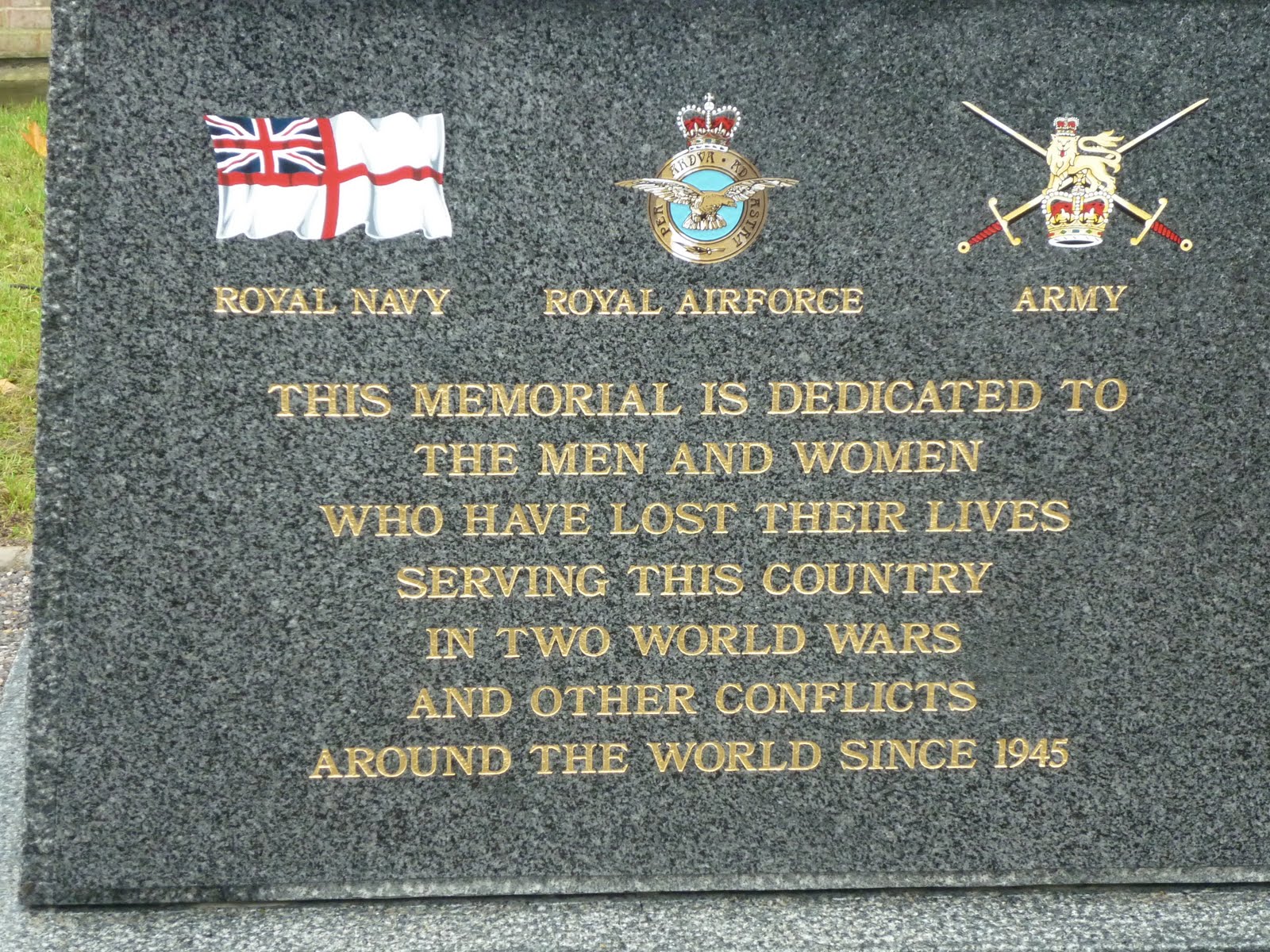
Hainault War Memorial


This afternoon I attended the dedication of a new war memorial in Hainault. The memorial is situated in Manford Way, opposite the shops. Also there were Lee Scott MP, the Mayor and Deputy Mayor of Redbridge, the leader of the council and a number of local councillors.


For long serving Hainault Cllr Ted Griffin, this was a particularly proud moment because he has been campaigning for a memorial for several years. Following the dedication, there were two minutes of silence and wreaths were laid. The rain did not dampen spirits and the event attracted quite a large crowd.

Monday, October 25, 2010

City Hall Austerity

On Thursday the budget committee received an update from Nicholas Griffin, the Mayor's budget advisor, who was appointed earlier this year and has embarked on a raft of projects designed to get better value from the administration.

Since July there has been much progress:

Working with Westminster City Council, who pioneered this approach, we are seeking to reduce the number of IT hardware and software suppliers contracted across the GLA family. This can be quite challenging as each functional body has evolved its own systems over time, but streamlining suppliers will make it easier for departments to work together as well as allowing economies of scale. A similar approach is being pursued by Croydon and Waltham Forest councils.

Internal audit functions will be combined for the different bodies, reducing the number of auditors and allowing more economies of scale. One beneficial consequence will be to create a standard approach to audit reports across the Greater London Authority, with more transparency and democratic oversight.

The real possibility of sharing buildings to reduce estates costs is also being pursued. Space created by staff cuts at City Hall will be used to house staff currently working in other buildings which will then become surplus. The emergency services are looking at sharing new buildings, a forerunner being the site at Harold Hill where a new fire station and police base coexist. Combined fire and ambulance stations are also being considered. A new GLA wide buildings database will enable better use of space.

A 20% savings target has been set for procurement of services and supplies. There will also be more sharing of payroll services and committee support across the GLA.

Political Groups are not immune in the Age of Austerity and a paper was presented to declare savings achieved in each group's administrative support during the year. We have made a substantial contribution, with the Conservative Group underspending the budget by £189,000, roughly £17,000 for each of our eleven members.

Thursday, October 14, 2010

Policing Budget - The Investigation Continues

This morning the budget committee took evidence from Bob Quick, the former chief constable of Surrey and assistant commissioner at the Met. A while ago Bob had problems when his confidential papers were photographed by journalists in Downing Street, so it was good to see that he had obtained an opaque file holder for today's session, and his evidence was also detailed and useful.


Years of Plenty

Questioned about the period of growth which has led to the Met having the largest workforce in its history, Mr Quick acknowledged that in addition to the demands of neighbourhood policing there had also been growth in homicide investigators and counter terrorism officers. These were needed to respond to the new challenges and threats facing London. There were also more officers supporting partnership working with local authorities, which produced varying results in different areas.

With this growth came an increase in monitoring, management and inspection, which Mr Quick viewed as less welcome. Figures supplied by Professor Marian FitzGerald - who gave robust evidence at our last meeting - demonstrated that a 28% increase in police constables had been accompanied by a 49% increase in police sergeants and a 34% increase in inspectors and higher ranks, so the growth in managers appeared disproportionate. Mr Quick agreed and he predicted that a retreat from the previous target driven culture would lead to less demand for managers. He also agreed that it was worth considering combining specialist teams and reducing the number of borough command units to achieve savings in management and bureaucracy.

A move away from geographically based management to specialist functions had been shown to achieve savings in Norfolk, Surrey and Warwickshire, however the effect on customer satisfaction had not yet been measured. The committee also felt that these county forces were not comparable to London.


Civilianisation

Mr Quick became the latest expert witness to request a move away from simple police officer numbers as a measurement of effectiveness. Measurement of the work undertaken by officers showed that it could be classified as:

60% routine tasks - which is not to say unimportant, including custody processing and taking witness statements. Much of this work could be done by civilians, but public confidence could suffer.

28% bureaucracy - completing paperwork, providing statistics. A single support office assigned to a squad of police could free up a great deal of police time by doing this work for the whole squad.

12% Policing - which must be done by a warranted officer, for example attending court and interviewing suspects. This is where police resources should be focused.

But wide ranging changes to working practices faced formidable obstacles, including legislative barriers and public concerns. These could only be overcome by a consensual approach, securing agreement from the officers and the community they are there to protect.

Tuesday, October 05, 2010

Conference Day Two


Monday was a day of London and transport debates, appropriate on the day of the second in Bob Crow's series of Autumn Tube strikes.


Boris at the Conference


The morning kicked off with a debate on transport and skills in the main hall. Two years ago a smaller chamber was used for most of the conference but this year there is increased demand so the larger Symphony Hall with its four tiers of seating is being used. Philip Hammond and Theresa Villiers announced transport policies including an extended commitment to build the new high speed railway beyond Birmingham, eventually aiming to connect Manchester and Leeds with London. The ministerial panel were also noticeably supportive when an audience member asked for measures to curb the power of the transport unions.


A session with Boris followed and the hall was predictably packed. Hordes of photographers descended on the front of the stage and I had to make do with my own pictures of Boris on the big screen above the stage, rather than the real thing. The great man began his speech with a condemnation of the politically motivated strikes which struck a chord with his audience. He then went on to make his case for defending spending on London's infrastructure, and it is to be hoped that George Osborne was listening from backstage.


No doubt mindful of the commuters struggling into work then returning home to watch his performance on the late news, Boris provided less of the usual humour in what was a hard hitting speech.


Motor Manufacturers and Traders Lunch


I don't usually do conference lunches, wishing to avoid the wrath of my personal trainer when I return to London, but I made this one exception this week. I found myself seated with representatives from Toyota, Honda and London Taxis International. The conversation focused on the development of electric cars and hybrid vehicles which they hoped would maintain our love affair with the car into the future, whilst hugely reducing the carbon footprint of motoring.


The development of plug in points for electric cars is likely to be a restraint on use in much the same way as a lack of filling stations limits the take up of alternative fuels. I suggested that electric cars could be charged at home, using the mains supply and it turns out that this solution is being considered. Range remains a problem for battery powered cars, but in London most journeys are over short distances, making them a good option for the capital.


The man from LTI told me that their vehicles are now being manufactured in China for use in their own cities. You can get a traditional black cab on the streets of Beijing.


London Reception


With Boris and his team returning to the city, I was left to speak to the London fringe meeting sponsored by Four Communications. I don't often get to step out of the 'shadow of Boris', and I took the opportunity to update delegates on the results of the strike which union leaders predicted would 'paralyse London':


40% of services ran as planned.


Only the Circle Line had no services.


The Hammersmith & City, Victoria, Waterloo & City and Northern Lines ran a full service.


DLR - with driverless trains - and buses were unaffected.


Boris Bike usage was up by 25%.


We were grateful to the volunteers who helped to run the underground and to the workers who defied their union bosses and turned up for work in greater numbers than during the previous strike, and we hoped the Mayor could find some way of rewarding their loyalty to London.

Monday, October 04, 2010

Conference Day One


Sunday at the Conservative Conference here in Birmingham saw me address the Thames Gateway fringe meeting, then attend a reception hosted by Women 2 Win.


Thames Gateway

I shared a platform with Thames Gateway Minister (and old Assembly colleague) Bob Neill and Adam Marshall who represented the British Cambers of Commerce.

There was concern that the impending cuts might damage plans to regenerate the Gateway, and I put in a strong plug for Crossrail, the DLR extension to Dagenham Dock and 12 car trains on the C2C Fenchurch Street line. I also pointed out that the current decision not to stop Eurostar services at Stratford meant that the station hardly merited the title 'Stratford International'. It is inevitable that some projects will be delayed or scaled down in the current climate.

On a more positive note, there is now an opportunity to streamline the confusing hierarchy of public bodies currently administering the area. Bob suggested that the current situation looks rather like the wiring diagram for an Exocet missile when put on paper - with the difference that a missile is designed to go somewhere swiftly... Streamlining would make it easier for businesses to invest.

We also wanted an end to restrictive planning regulations that mitigate in favour of large blocks of tiny flats. I told Bob that we need 'buy to live, not buy to let'. For his part the minister was keen to involve local councillors more in planning decisions and he announced a welcome initiative to repeal the laws of predetermination that currently prevent councillors deciding on an application that they have campaigned on in the past.


Women 2 Win

Hosted by Theresa May this reception provided a welcome opportunity for me to catch up with some of the candidates I coached before the election. These included Karen Bradley, now the MP for Staffordshire Moorlands, and Louise Bagshawe, the MP for Corby, as well as Norsheen Bhatti who fought a difficult seat in Stoke and found the experience really motivating.

There were lots of women who are still looking for seats and with the decision to reopen the candidates' list again, there is plenty of potential for newcomers. W2W are also keen to help women with public appointments to boards and quangos, so there are still many opportunities for members to follow in the footsteps of Amanda Sater who was recently appointed to the MPA.

Saturday, October 02, 2010

Boris Visits Gants Hill


Friday saw the long awaited opening of the new Gants Hill Roundabout. Work at the site has disrupted traffic flow for over a year and there have been some frustrating delays for businesses and residents. Boris turned out in the rain to declare the roundabout open. He was welcomed by Deputy Mayor Cllr Ruth Clark and chairman of the local business forum, John Clark.


A crowd of onlookers turned out to see the mayor and one person quipped that it had taken longer to rework the roundabout than to build the Colosseum in Rome. Boris predicted that the roundabout would be safer than the Colosseum...


Then it was on to Fairlop Waters where money from the Mayor's tree fund has been used to improve the park, providing not only trees but climbing boulders as well. Boris was photographed with the boulders and with local schoolchildren. He also took a moment to be interviewed by LBC, condemning the totally unnecessary tube strikes planned for Sunday and Monday.


Finally, Boris was joined by Seb Coe and Kate Hoey at Redbridge Sports Centre where he met more local children and handed over a contribution from the Olympic fund to enable more sporting activities for young people in Redbridge. The media became very excited when Boris and Seb took part in an impromptu badminton game, but Boris acquitted himself well and didn't drop any shuttles.

Sunday, September 19, 2010

Austerity Policing

With the Met facing a period of belt tightening, Thursday's budget committee convened to take evidence from academics and former senior officers. Providing their take on policing in the age of austerity were professors Betsy Stanko and Marion Fitzgerald, Dr Tim Brain who was formerly chief constable of Gloucestershire and Bernard Hogan-Howe, a former chief constable of Merseyside and now Her Majesty's Inspector of Policing for London. A strong line up with strong opinions.

At 33,000 warranted officers plus 5,000 PCSOs, the Met is now a larger force than at any time in its history. The period from 2000 has seen unprecedented growth from a base of 26,000 officers, built on an injection of cash that is just not sustainable any longer. The key question is how to reduce resources without allowing crime to rise.


Policing Priorities

The introduction of neighbourhood policing has created a visible presence with PCs and PCSOs patrolling even the smaller shopping centres and residential areas. They rarely encounter crimes in progress but there is a deterrent effect and the sight of uniformed officers reduces the fear of crime. Fear of Crime is significant because it discourages people, particularly women and older people, from venturing out of their homes and in the worst cases effectively imprisons them behind closed doors.

However the attachment of teams to council wards led to some inefficient allocation of resources. Some wards are very quiet, with low crime, but they still get a - not very busy - neighbourhood team. And many ward boundaries run down high streets, creating an impractical division between the policing teams on each side of the street.

An alternative is being explored in Manchester. There crime mapping - which we have in London - is used to identify 'hot spots' and teams of officers are focused on these locations. Clearly this is better use of resources but it runs the danger of displacing crime to other locations. Possible 'hot spots' include town centres, problem estates and transport nodes.

Bernard Hogan-Howe made the obvious point that policing should follow the people, targeting stations during commuting time and town centres in the evening, particularly on Fridays and Saturdays.

During his time at Merseyside Mr Hogan-Howe identified his key priorities as improving detection rates, reducing anti social behaviour, and improving the telephone interface with the public. The last of these, providing a quick response to emergency calls and a swift answer to non emergency calls, meant that the provision of police stations could be reviewed. Having an effective switchboard was a cost effective alternative to providing staffed front desks which saw less use as technology improved.

He also felt that there should be more single patrolling by officers in low risk areas, stating "If a PC can't walk alone in a area then who can?". The practice of PCSOs patrolling in groups of up to eight also needed to end.


Priorities for Savings

The obvious areas were suggested - overtime is too high in London, the MPA reserves are higher than necessary, back office functions have also grown since 2000 and need to be streamlined.

Economies of scale were also possible. At present every London borough has its own commander and HQ, but is that necessary? Councils are looking at sharing services across boundaries and the police could do the same. There are also a large number of specialist units, for example the wildlife crime unit, the antiques crime unit, etc. These are important but they could be combined to some extent, making savings on support services.

Bureaucracy had also ballooned since 1997, with demands for statistics and targets to achieve. Forms have to be completed when tasers, CS spray and even breathalysers are used - are these all still necessary? And what about the infamous stop and search forms that officers are required to complete? It was acknowledged that the Met had made good progress in reducing costs in its finance and IT departments but other parts of the organisation had room to be more efficient.

One thing the witnesses did agree on was that it is all but impossible to produce a credible measurement of front line policing effectiveness. Crime levels are affected by many other factors and lower level measurements may be accurate but lack relevance. The committee's search for a simple way of measuring policing is starting to look like the quest for the Holy Grail.

Friday, September 10, 2010

Yes He Will !

Boris has finally announced that he will contest the 2012 Mayoral Elections.

He states that his priorities are cutting crime, protecting our valuable green space, improving public transport and building more affordable housing.

Personally, I am delighted that he has chosen to stand again. Much has been achieved since his election in 2008 but much remains to be done, with long term challenges including bringing London safely through the recession, securing Crossrail and successfully hosting the 2012 Olympics. These simply cannot be achieved in a single four year term.

Boris will be a champion for our city and a critical friend for the new coalition government, ready to promote London's needs without resorting to damaging confrontation.

Boris also has a unique appeal that applies both to conservative minded suburban voters and to the trendy residents of Inner London. This broad coalition of support is a complete contrast to the divisive and harmful politics of his predecessor.

Supporters can join the campaign at www.Backboris2012.com .

Friday, September 03, 2010

Sign of the Times at Havering-atte-Bower


Boris was on good form when he visited Havering-atte-Bower to unveil the village sign on the green. He was greeted by members of the village conservation society as well as staff and patients from the nearby St Francis Hospice.


After a short introduction from local MP Andrew Rosindell, the Mayor tugged the cord to reveal the new sign which was designed and purchased by the local society. As a token of thanks the villagers presented him with a painting of the royal palace which once stood here.


There followed a swift walkabout in nearby Collier Row to meet local residents and shopkeepers, who as always were delighted to welcome our celebrity Mayor.

Sunday, August 29, 2010

Havering Show


The annual Havering Show is running today and tomorrow. This afternoon I paid a visit along with the Mayor, Cllr Pam Light.


Entry is free and large numbers of visitors enjoyed the local food and the somewhat changeable weather. There is a large funfair with exciting rides and an arena featuring shows of horsemanship and - unusually - camel racing.


The show also incorporates our environment fair, Planet Havering, which provides advice on recycling and saving energy, and features presentations from council departments. Incorporating this event into the main show has saved money of course, but it has also widened its influence beyond the 'converted' who used to attend Planet Havering, exposing a wider audience to advice on living a greener lifestyle.


Finally, there are many local charities including the new Havering Museum, the Upminster Windmill preservation society, and the St Francis Hospice. They were offering a slim chance to win a car by rolling seven 6s on seven dice. Nobody had won when we arrived but the Mayor was optimistic and had a go...


The Hospice also signed me up to their excellent 'Sponsor a Nurse' scheme, which they are currently promoting. For just £3 a month supporters can sign up to keep this valuable local facility working for people in Havering, Redbridge, Brentwood and Barking & Dagenham. I visited the hospice a couple of years ago and was most impressed with the standard of care they offer. Details of the 'Sponsor a Nurse' initiative are available at http://www.sfh.org.uk/ .

Sunday, August 15, 2010

Redbridge Skyride


The weather was excellent for today's Skyride, which provided a car free circuit linking the new cycle track to Barkingside High Street, passing the Dick Turpin and Fairlop Waters Country Park. Over 5,000 cyclists from around London came together to explore the more rural parts of Redbridge at the Sky sponsored event. Participants included Olympic competition level riders, families, participants in fancy dress and even a few local politicians.


The event was led off by Kulveer Ranger, representing the Mayor, and he was followed by local MP - and transport PPS - Lee Scott, Council Leader Keith Prince, with his Lib Dem deputy Ian Bond. Dressed as I was in an unsuitable jacket and unusual blue socks, I soon found myself trailing behind on a bike which the organisers kindly loaned to me for the day. My personal training finally carried the day as I dug deep into my reserves and struggled back up the hill to the cycle track for a welcome bottle of water and sausage in a roll.


Also present was the mayor of Redbridge, Jim O'Shea, with his team of volunteers collecting for his charity. I made sure they got my loose change before I set off, thus lightening the load for the journey ahead.


This was the second of three Skyride events to be held over the summer months. The final event will take place on 5th September in Central London. Details can be found at http://www.goskyride.com/ .

Tuesday, July 27, 2010

Minister's Question Time

Last week we made history at the Assembly. Ten years after the GLA was created, a government minister finally presented himself before the Assembly to answer questions about London matters.


Before the Election

The previous administration always refused to appear. When the Assembly invited New Labour's Lord Falconer to take questions about his London responsibilities, we were airily dismissed on the grounds that it was unconstitutional for ministers to appear in their official capacity. We were told that unnamed officials had insisted on the convention which then became the norm. Ministers would answer to select committees in Parliament, not the London Assembly - a body which they had created.

Not that they never visited us - that would have been impractical. Ministers and senior civil servants were happy to visit City Hall to brief members, usually over a working lunch. But no minutes were taken and the meetings were not recorded.

Towards the end of Labour's term, the government admitted that there was a democratic deficit, but their solution was misguided. They set up a London Select Committee for MPs, along with select committees for all the other regions, thus failing to recognise the unique governance arrangements for the capital - arrangements that they had put in place themselves. Liberal and Conservative MPs joined together to oppose the new committee system, perhaps sending a signal for the greater cooperation that was to follow.


After The Election

Two former Assembly Members became ministers in May - Lynne Featherstone went to the Home Office to take on the equalities brief, and Bob Neill became the junior minister for local government. Bob always argued that Ministers should be answerable to the Assembly on London matters, so I was optimistic about our chances of securing an appearance. After David Cameron addressed the Scottish Parliament and the Welsh Assembly, a new and welcome precedent appeared to be being set.

We invited Bob to take questions about devolution of powers to London and he accepted, appearing on Wednesday morning.


Localism in Action

Early in the session Bob stressed the government's support for the Mayor and the Assembly to continue. This welcome assurance should remove one of the tough questions that I faced when I first stood for election. Could the Conservatives be entrusted with London Government after they abolished the GLC in the eighties? The question was raised repeatedly at hustings around Havering & Redbridge and after the election it was cited as a rather dubious justification for the Labour and Liberal groups getting together to shut Conservative members out of major Assembly roles - thus setting an unfortunate precedent which endures to this day.

Bob also spoke of his desire to simplify the London Plan, making it a less prescriptive document and devolving decisions to the boroughs and to local people. I suggested that he might consider shortening the consultation period - the current document has the gestation period of two elephants - and he agreed that would be a good thing.


Precedent

Bob was confident and clearly on top of his brief. The Assembly Members were constructive and sent him away in one piece. I hope the very positive session will reassure those 'unnamed officials' who discouraged Labour Ministers from attending, because there are other politicians who we would like to question.

Rail Minister Theresa Villiers, Housing Minster Grant Shapps, and Ministers with environment and policing briefs could all be invited in future. I hope they will come because we don't bite and I would venture to suggest that we are more constructive and better informed on London matters than some of Parliament's Select Committees. Perhaps we could even see an appearance from another former AM - Lynne Featherstone.

Monday, July 19, 2010

MQT


Last Wednesday's question time was the last until September and a holiday mood might have been expected. Instead Boris found himself under pressure from all sides - including his own. The Conservative Group are quite an independent minded bunch and colleagues often raise matters of fundamental disagreement during questions. On occasions several difficult subjects coincide on the agenda and the Mayor gets a difficult time - this was one of those occasions.


Financial Matters


With cost cutting now on the agenda throughout the country, tough budgetary decisions loom ahead and they featured in the initial questions from all three groups.


First off was Labour's John Biggs, demanding to know if Boris supported George Osborne's budget. Of course he does, generally - but what about the parts the threaten London's public services. Here Boris made his promise to fight a robust defence, particularly of Crossrail and Tube renewal. John found this circle hard to square, but really it's not that much of a struggle - not to anyone who watched Ken fighting London's corner against New Labour (then campaigning for their re-election). London needs a Mayor who will stand up to - and a little way apart from - governments of their own political hue. Westminster, with its hordes of MPs from the provinces, is always suspicious of the capital. Ken managed the balancing act and so does Boris, a Mayor not known for always agreeing with David Cameron.


Mike Tuffrey's turn next, and he sought to get some early indicators of the fares decisions that are traditionally made over the Summer. Boris wasn't being drawn, so I shouldn't have been optimistic when I pressed him on council tax. Would there be an unprecedented freezing of the precept for the third year running? Again the Mayor refused to make any commitments, so we will have to wait until next year's budget round for an answer.


Olympics


Andrew Boff piled in on the Olympic stadium. He is concerned that the site will prove to be a white elephant when the games are over. The problem is that nobody wants a stadium which has a running track separating the crowd from the on pitch action - well nobody who isn't called Seb... Boris reassured us that the games would be fantastic and all the venues would subsequently be put to good use.


Andrew came back on the vexed matter of the Olympic Village. Current plans are likely to result in rich block and poor block housing after the games - a phenomenon that Andrew refers to as Social Apartheid. Again we were reassured that housing would be available for people from different backgrounds to form a mixed community.


Then Victoria Borwick raised the contentious matter of Oxford Street and its bus jam. Boris tells us that some services have been moved, clearing space in the street, but Victoria believes that more can be done. The opinion of traders in the street is hotly contested and there was a robust exchange of views. On Sunday the east end of the street was moving freely but road works mean that some buses are currently diverted so my own observations may not be typical.


Photography


I flagged up the Romford incident and asked for clear guidance to be issued to police officers. The public should be free to take photographs of events in London without fear that they are breaking the law. Unfortunately Boris was not in the mood to make many concessions by now, and an earlier question had flagged up some of the more basic guidance given to officers as a waste of time. The Mayor was sure that matters could be left to the discretion of individual officers. At one time I would have agreed with him, but having seen the evidence of heavy handed policing of photographers I'm not convinced.


I tried a new tack - perhaps the sections of law making it an offence to photograph police officers should be repealed as part of the government's welcome review of civil liberties. Boris brushed this suggestion aside, preferring to rely on the common sense of police officers.


I was disappointed because I suspect it is only a matter of time before another Jules Mattsson type episode occurs. I will be writing to the Home Secretary making the case for a change in the Law.

Tuesday, July 13, 2010

Questions to the Mayor

Tomorrow sees the last question time before the August break. Following recent events in Romford I will be asking about the police approach to photography in London:

What are the current police guidelines on photography by members of the public? How are these communicated to front line police within the Met and are there any plans to review them?

This fairly open ended approach will allow follow up questions about the Romford incident as well as the Home Secretary's recent announcement that stop and search guidelines are to be tightened.

Sunday, July 04, 2010

Pride 2010


A first for me on Saturday - I took part in the Gay Pride parade. The route starts at Baker Street, running down to Oxford Street then along to Oxford Circus. It then follows Regent Street to Piccadilly Circus before concluding in Trafalgar Square. Not a short walk, and it seemed longer under a blazing sun, with plenty of stopping and starting.


Everyone was in a party mood and we received a good reception, despite the presence of Socialist Worker activists. The Conservative contingent was around 40 strong and included a couple of MPs and my Assembly colleague Andrew Boff, pictured along with myself and Graham Archer who contributes some superb material to Conservative Home.


It is important for the Party to be seen here and I hope we can persuade more people to join us next year - we may even hire an open topped bus.

Reception for New Councillors


On Thursday evening the Assembly hosted a reception for new councillors at City Hall. Many of those elected in May took advantage of this opportunity to meet members and officers, and to find out more about the GLA. The meeting was addressed by Communities Secretary, Eric Pickles and Mayor of Hackney, Jules Pipe, with Assembly Chair Dee Doocey, extending a welcome to the guests.


Of course most of those present were Labour, reflecting the mixed result in May, but there were plenty of Conservatives and Liberals too. Pictured are:


Cllr Damian White (Hylands Ward, Havering)

Cllr Bernadette Mill (Larkswood Ward, Waltham Forest)

Cllr Osman dervish (Mawneys Ward, Havering)